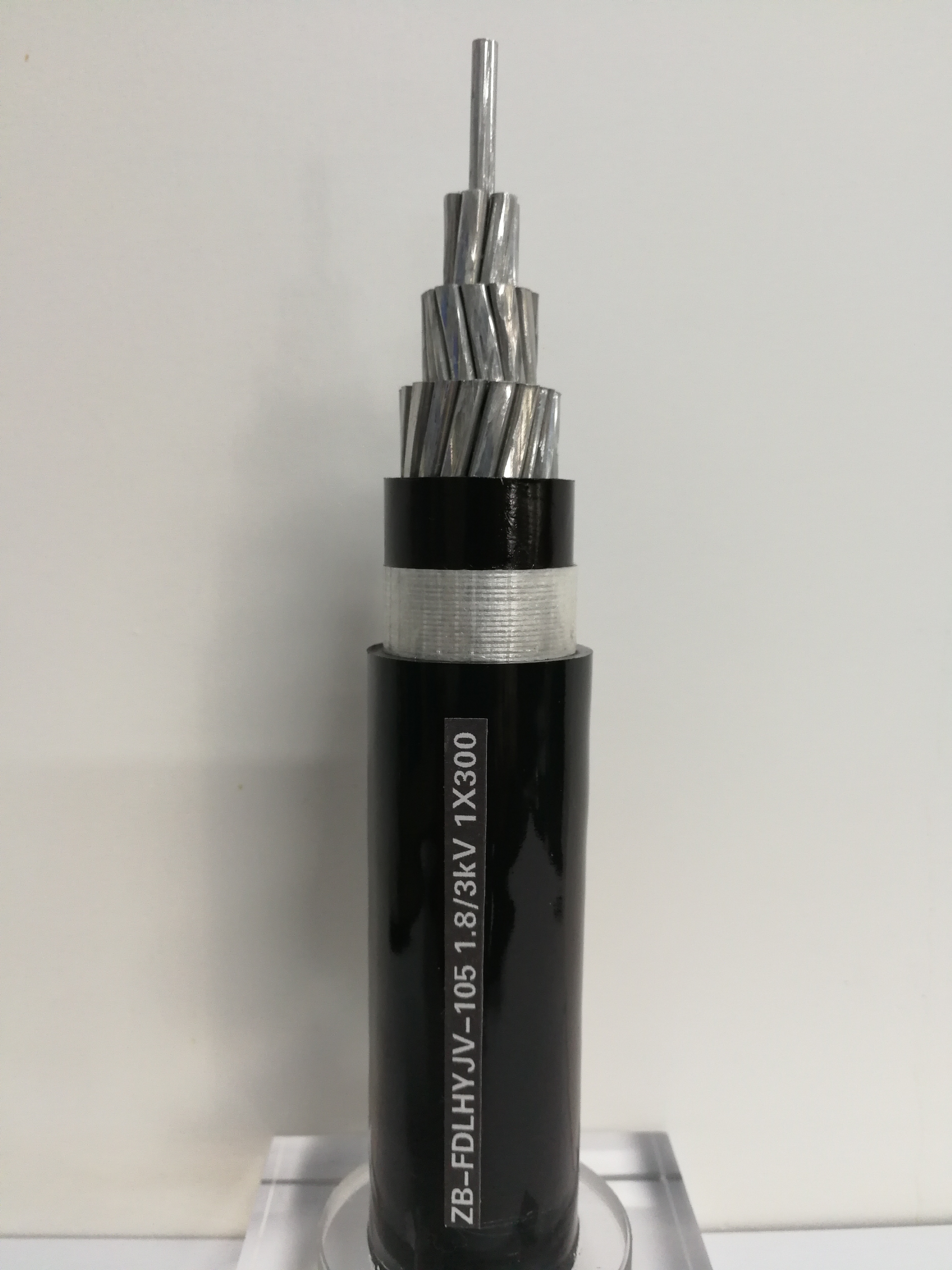
Wind Turbine Tower Cable
AA-8030 aluminum-alloy conductor cable for fixed installation inside wind turbine towers, engineered for extreme environments: −40 °C cold (optional −55 °C), oil & salt-spray resistant, Class-B flame retardant. A 20+ year maintenance-free power backbone for onshore and offshore wind farms.
- Rated voltage 1.8/3 kV — complies with GB/T 29631-2013 & GB/T 31840.1-2025
- Two structures available: XLPE-105 plastic (ZB-FDLHYJV) and EPR-105 rubber (ZB-FDLHEH)
- Weight ≈ 50% of equivalent copper cable; material cost 30–50% lower
- Bending radius 7D vs. copper 12D — easier tower routing, faster installation
- 336 h neutral salt spray & 1008 h accelerated weathering tested
- Cu-Al friction-weld transition terminal passes 1000-cycle thermal test (IEC 61238-1)
Six Performance Breakthroughs
Engineered through material formulation, production process and structural innovation to give wind farms unprecedented reliability.
1. AA-8030 Conductor
High-performance aluminum alloy with conductivity ≈ 61% IACS, density only 30% of copper — balanced lightness and strength.
2. −40 °C Cold Resistance
Sheath elongation stays ≥ 30% at −40 °C. Optional −55 °C version for polar / high-altitude wind farms.
3. 105 °C Thermal Class
EPR-105 / XLPE-105 insulation lifts ampacity 7–15% (per IEC 60287) vs. traditional 90 °C cable — ideal for MW-scale turbines.
4. Oil, Salt & Weathering
336 h neutral salt-spray (change rate ±30%), 1008 h accelerated aging. Built for offshore humidity and onshore UV exposure.
5. Class-B Flame Retardant
Passes GB/T 18380.34 bundled Class-B combustion. RoHS / REACH eco-friendly compounds for safe, low-smoke performance.
6. Two Structures
Rubber (EPR+CSM) for flexible / outdoor use; plastic (XLPE+PVC) for cost-effective fixed runs from nacelle to switchgear.
Aluminum Alloy vs. Copper vs. Plain Aluminum
Six-axis comparison proving AA-8030 hits the sweet spot of conductivity, mechanical strength and lightness.
| Indicator | Electrolytic Copper (annealed) | AA-8030 Aluminum Alloy (annealed) | Plain Aluminum 1350-H12 |
|---|---|---|---|
| Conductivity (%IACS) | 100% | ≈ 61% | ≈ 61.5% |
| Density (g/cm³) | 8.89 | 2.71 (30% of Cu) | 2.703 |
| Tensile Strength (MPa) | 220 – 270 | 98 – 159 | 70 – 90 |
| Elongation | 25 – 35% | ≥ 10% | ≥ 12% |
| Repeated Bending | industry baseline | ≥ 25 cycles @ 7D bend radius | Prone to fracture under bending |
| Creep Resistance | Very high | Excellent — 300% of plain Al, close to copper | Poor — reference (100%) |
| Self-support Span | 2750 m | 4000 m at equal weight | — |
Data source: IACS & GB/T 31840.1. Compensating the resistivity by upsizing the cross-section 1.4–1.6× gives AA-8030 cable the same ampacity as copper.
Copper → Aluminum Alloy Equivalent Sizing
Direct-replacement guide for retrofit or new-build projects under GB 50217-2018.
| Copper (mm²) | AA-8030 Cable (mm²) |
|---|---|
| 35 | 50 |
| 50 | 70 – 95 |
| 70 | 120 |
| 95 | 150 |
| 120 | 185 |
| 150 | 215 – 240 |
| 185 | 270 – 300 |
| 240 | 340 |
| 300 | 400 – 450 |
| 400 | 500 – 630 |
Ampacity Principle
At equal cross-section, Al ampacity ≈ 61% of Cu. At equal weight, Al ampacity exceeds Cu by 200%. Practical rule: choose Al CSA 1.4–1.6× Cu to reach equivalent electrical performance.
Weight & Cost Saving
Material cost is 30–50% of copper (Cu price is 4–4.5× Al). Cable weight drops to about 50%, cutting transport & installation expense by 30%+ across the whole project.
Equivalent-Performance Weight Reference
Real cable samples at matching ampacity. Aluminum-alloy cable is only 46% – 68% the weight of copper.
| AA-Alloy Cable Model | Al Weight (kg/km) | Equivalent Cu Model | Cu Weight (kg/km) | Weight Ratio |
|---|---|---|---|---|
| FDLHYJV 1×300 | 1150 | YJV 1×185 | 1870 | 61.5% |
| YJLHV 4×150 | 2665 | YJV 4×95 | 4057 | 65.7% |
| WDZC-YJLHY 3×400 | 5296 | WDZC-YJY 3×240 | 7750 | 68.3% |
Copper-Aluminum Transition System
Solves the historic worry of Cu/Al joint oxidation and loosening through a validated, tested connection ecosystem.
Friction-Weld Terminations
Brand-name Cu-Al transition terminals and connectors joined by friction-stir welding at molecular level — eliminates galvanic corrosion and contact overheating.
IEC 61238-1 Certified
Terminal design and testing follow the international connector standard, ensuring worldwide acceptance and interchangeability.
1000-Cycle Thermal Test
Full connection system passed 1000 thermal cycles at the National Wire & Cable Quality Testing Center (Wuhan) with negligible temperature rise and resistance growth.
Dedicated Crimping Tools
Proprietary compression dies and crimping tools designed specifically for AA-8030 alloy cable — field-installable by any trained crew.
Full-Climate Ready
Verified for high altitude, coastal salt spray and sub-zero cold — the connection performs wherever the cable runs.
Brand Assurance
All transition hardware sourced from top-tier Chinese manufacturers with proven market track record.
Design & Test Standards
| Product Standard | GB/T 29631-2013 — 1.8/3 kV wind-farm torsion-resistant flexible cable GB/T 31840.1-2025 — Aluminum-core extruded-insulated power cable |
|---|---|
| Enterprise Standard | Q/GS 02.107-2025 — Rubber-structure tower cable (ZB-FDLHEH-105) Q/GS 02.108-2025 — Plastic-structure tower cable (ZB-FDLHYJV-105) |
| Flame Retardancy | GB/T 18380.34 — Bundled Class-B combustion test |
| Salt-Spray Test | GB/T 2423.17 — 336-hour neutral salt spray |
| Connection Test | IEC 61238-1 — Integrated terminal / connector standard |
| Design Code | GB 50217-2018 — Cable engineering design standard |
| Eco Compliance | RoHS · REACH |
| System Certification | ISO 9001 · National Industrial Production License |
Type-Test Reports Available
Independent type-test reports for both plastic-structure (ZB-FDLHYJV-105) and rubber-structure (ZB-FDLHEH-105) tower cable are available on request from national-level laboratories.
Sustainability
Aligns with national “aluminum replaces copper” strategy. Aluminum production uses about one-third the energy of copper; recyclability exceeds 95%.
Where This Cable Works
Engineered for fixed runs inside tower — from nacelle down to the base switchgear and further to box transformer / step-up station.
Onshore Wind Farms
Harsh-climate and high-altitude sites with wide day-night temperature swings.
Offshore & Intertidal
Salt-spray and humidity resistance for coastal and marine atmospheres.
3 MW+ Turbines
Higher ampacity supports MW-scale generator output with safety margin.
Tower Fixed Runs
Nacelle to base vertical main cable — resistant to mechanical stress.
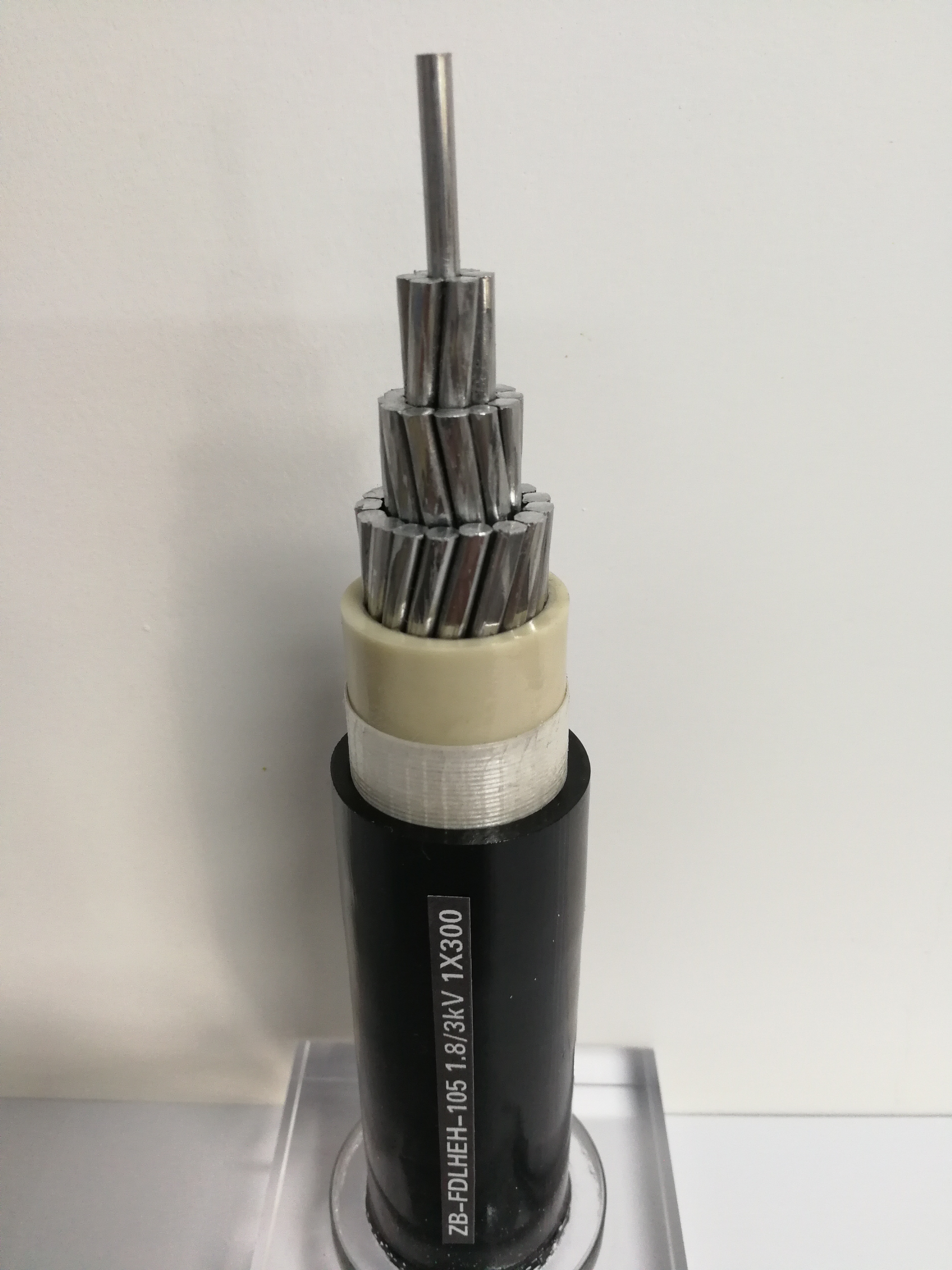
Get a Tower Cable Quotation
Send your voltage class, cross-section, structure (rubber / plastic) and quantity — reply within 24 hours.